I Declared War on 50 Geese

A real story, real tactics, and what's actually legal when Canada geese take over your pond or pool.

Quick answer: The most effective legal way to get rid of geese in a pond or pool is active hazing: motion-activated sprinklers, noise, and movement, combined with visual deterrents like reflective pinwheels, decoys, and grape-scented repellent. Geese are federally protected under the Migratory Bird Treaty Act, so scaring them off is legal, but touching eggs or nests is not without a USDA/APHIS registration.

How bad can it actually get?

One year, more than 50 Canada geese decided our small backyard pond belonged to them. It got bad fast: our dogs kept eating goose droppings around the water's edge, picked up worms from it, and we ended up spending several thousand dollars at the vet fixing that. At that point it stopped being an annoyance and became an actual problem worth solving. So we solved it. This is what worked, what's legal, and what to watch out for.

Why geese show up in the first place

Ponds are the obvious one: open water, grassy banks for grazing, and few natural predators in a residential neighborhood. But geese show up in swimming pools too, which surprises a lot of people. A pool reads as safe open water from the air, especially early in the season before geese have scouted the area well. Once a pair decides a pool or pond is safe, they'll keep coming back, and other geese will often follow. The droppings are the real problem either way: in a pond it's a mess, but in a pool it's a genuine health and sanitation issue, since chlorine doesn't neutralize everything in goose waste and nobody wants to swim in it.

What actually worked

Some links below are affiliate links. See our affiliate disclosure.

Reflective garden pinwheels

Reflective pinwheels

Movement and flashes of light near the water make geese nervous about landing. Cheap, low-effort, works best combined with something else on this list rather than alone.

Shop Reflective Pinwheels
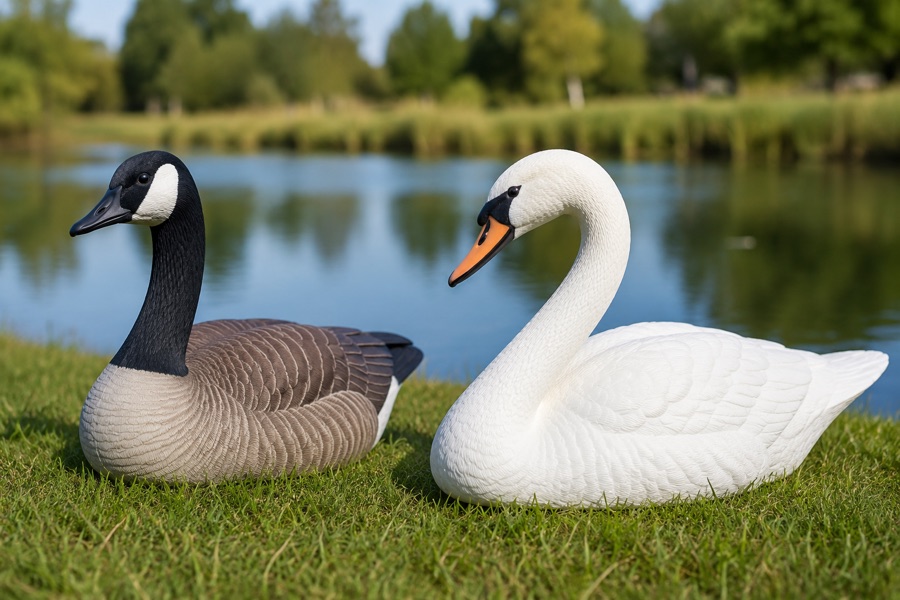
Goose and swan decoys

Decoys

A dead-goose decoy and a white swan decoy both helped. Geese read a "dead" member of their own flock as a danger signal, and swans are territorial toward geese, so both send the same message: this water isn't safe.

Shop Swan Decoy
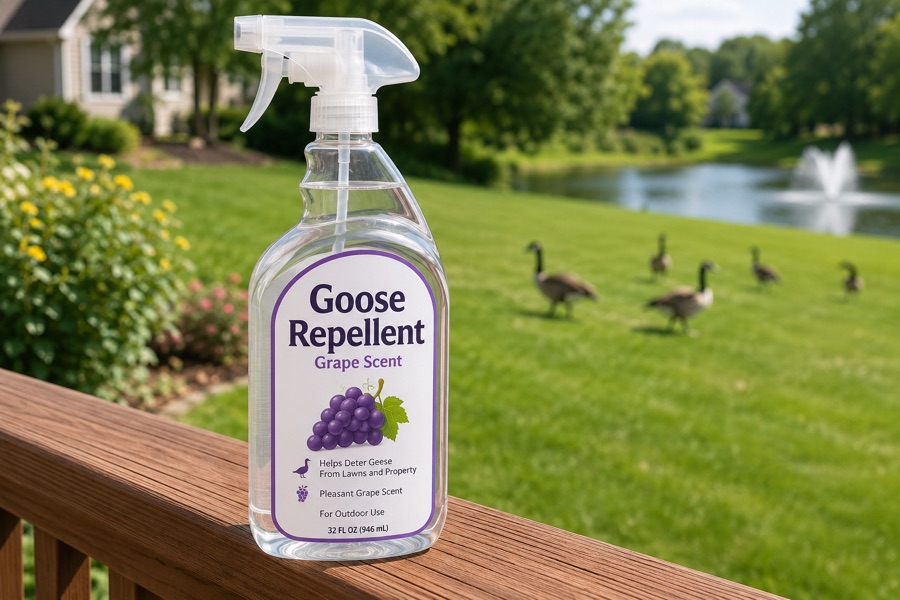
Grape-scent goose repellent spray

Grape-scent deterrent

Geese are genuinely averse to the smell and taste of grape. A grape Kool-Aid mix sprayed on the grass they'd normally graze on worked well. This is the same compound behind the commercial grape-scented goose repellents you can buy.

Shop Grape-Scent Repellent
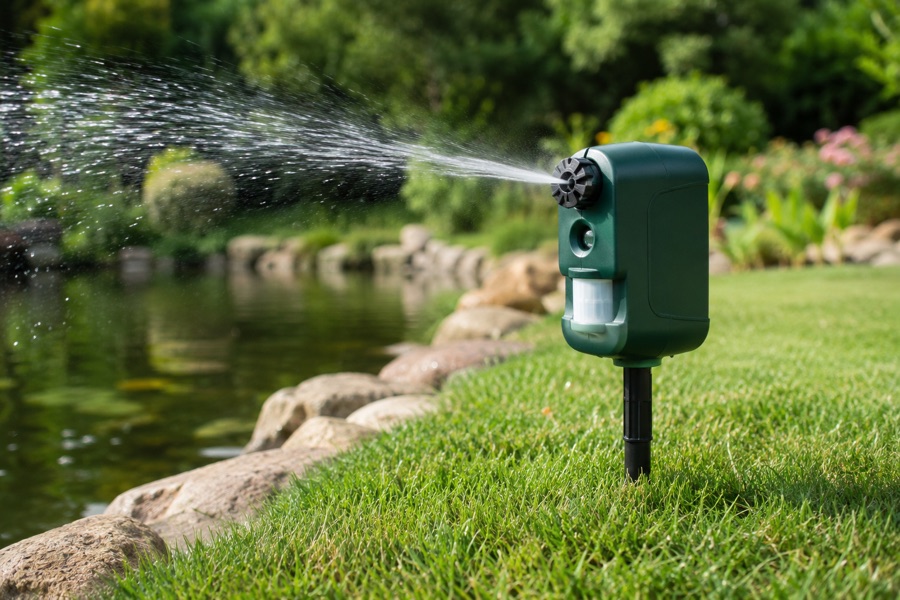
Motion-activated sprinkler deterrent

Active hazing

This is where it got fun: an RC jet ski across the pond and drones overhead, both used purely to chase geese off the water, no contact involved. Combined with two dogs let loose to run them off, this was the most effective tactic of all, by a wide margin. If you'd rather not run your own campaign, a motion-activated sprinkler does a similar job automatically.

Shop Motion-Activated Sprinkler

The legal line, and it's a real one

Canada geese are protected under the federal Migratory Bird Treaty Act. Everything above is non-lethal hazing: scaring geese off with noise, movement, decoys, or scent, without catching or harming them. That's generally legal and is exactly what USDA Wildlife Services and university extension offices recommend as first-line deterrence, no permit required in most places.

Where it gets more serious is nests and eggs. Touching, oiling, or otherwise disturbing an active goose nest is regulated, and doing it legally means registering through a USDA/APHIS or state-level egg-addling program first. If you're dealing with an active nest rather than just adult geese on the water, that's the step to take before doing anything to the eggs yourself.

New guides, straight to your inbox

No spam, just new lawn and yard guides as we publish them.